Welcome Speech
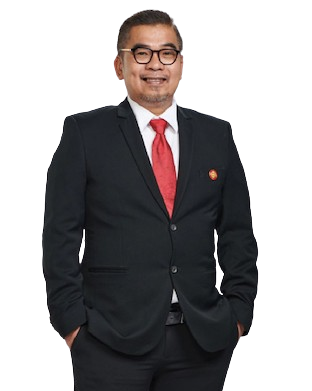
Prof. Mohammed Ali Berawi
General Chair of ADI

Prof. Mohammed Ali Berawi, M.Eng.Sc, Ph.D, is professor at the Faculty of Engineering, University of Indonesia. He completed his doctoral studies in Value Engineering and Innovation at Oxford Brookes University, UK, Master of Engineering Science (M.Eng.Sc.) from the University of Malaya, and a professional engineering degree (Ir.) from Universitas Indonesia. In 2024, he was awarded an Honorary Doctorate from Peter the Great Saint Petersburg Polytechnic University, Russia. He has been a Visiting Scholar at the Department of Civil Engineering and Environment, University of Washington, United States (2017), Visiting Professor at University of Malaya, Malaysia (2023), and Professor at the Graduate School of Industrial Economics, Peter the Great Saint Petersburg Polytechnic University, Russia (2019–2023).He also served as Editor-in-Chief of Value World, the journal of the Society of American Value Engineers (SAVE International) (2008–2014), and Editor-in-Chief of the Scopus-indexed International Journal of Technology (IJTech) (2010–2024). He has been listed by Webometrics as one of the Top Scientists in Indonesia (2015–2017), among the Top 500 Indonesian Best Researchers by the Ministry of Research and Technology (2020), and ranked in the Top 2% of the World’s Best Scientists by Elsevier and Stanford University (2021–2024).
His past roles include Lead Advisor to Indonesia’s Ministry of Transportation (2012), Chairman of the Standing Committee on Infrastructure Strategic Policies for the Indonesian Chamber of Commerce (2021), and Member Secretary of the Presidential Advisory Council (2020–2022). Since 2022, he has served as Deputy for Green and Digital Transformation at the Nusantara Capital Authority.Currently, he is the Chairman of the Indonesian Association of Lecturers (ADI) (2022–2027), Chair of the Supervisory Board for the Forum of Science and Technology Professional Organizations (FOPI) (2023–2026), Director of the Center for Sustainable Infrastructure Development (CSID), Executive Director of the ASEAN University Network for Sustainable City and Urban Development (AUN-SCUD), and Working Group Leader for Smart Cities at the Association of Pacific Rim Universities (APRU) Sustainable Cities and Landscapes (SCL).
Welcome Speech
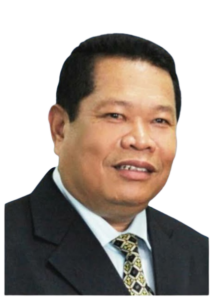
Prof. Dr. Po Abas Sunarya., M.Si.
Rector University of Raharja, Indonesia.
Prof. Dr. Po Abas Sunarya., M.Si., is a distinguished academic leader, researcher, and higher education advocate in Indonesia. He currently serves as the Rector of Universitas Raharja and has played a significant role in advancing private higher education through various leadership positions, including Chairman of the Indonesian Private Higher Education Association (APTISI) Region IV-B Banten and Honorary Board Member of APTISI Central. With an academic background in Public Administration and Management, his expertise encompasses educational management, public administration, organizational development, and institutional governance.
Throughout his career, Prof. Abas has actively contributed to academic development, research, and community engagement. He has authored numerous scholarly publications, participated in national and international academic collaborations, and provided leadership in various educational and professional organizations. His dedication to strengthening higher education quality, fostering institutional collaboration, and promoting innovation has established him as a respected figure within Indonesia’s academic and professional communities.
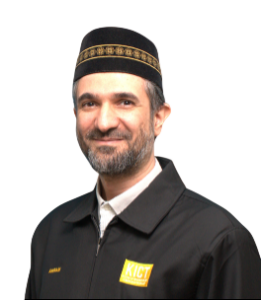

Prof. Dr. Akram M Zeki is a Professor at Kulliyyah of Information and Communication Technology (KICT) at International Islamic University Malaysia (IIUM).
He currently serves as the IOHK Coordinator at KICT and Senior Murabbi at CENTRIS, International Islamic University Malaysia (IIUM). Throughout his academic career, he has held several administrative positions, including Coordinator for Postgraduate Studies at KICT, Head of Research, Deputy Director of CENTRIS, and Acting Director of CENTRIS.
Prof. Akram has supervised more than 30 Master’s and PhD students and leads several research grants funded by IIUM, as well as national and international funding agencies. His scholarly contributions include more than 12 books, over 160 Scopus-indexed publications, and more than 45 book chapters. In recognition of his achievements, he has received several awards at both the university and national levels.
He currently serves as an Associate Editor for the Journal of Integrated Knowledge at IIUM and the International Journal of Islamic Applications in Computer Science and Technologies (IJASAT). In addition, he is the General Chair of the International Conference on Information and Communication Technology for the Muslim World (ICT4M) and the Co-Chair of the International Conference on Islamic Applications in Computer Science and Technologies (IMAN).
Prof. Akram has also made significant contributions to postgraduate assessment and academic quality assurance, having examined more than 100 postgraduate students and chaired over 400 PhD examination sessions.
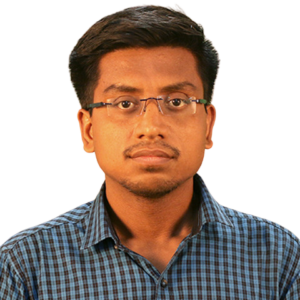
Keynote Speaker
Prof. Dr. Ankur Singh Bist, B.Tech., M.Tech., Ph.D.
Graphic Era Hill University, India

Prof. Dr. Ankur Singh Bist, B.Tech., M.Tech., Ph.D., is currently serving as a Professor in the Department of Computer Science and Engineering at Graphic Era Hill University, India. He has extensive academic and industry experience, particularly in the fields of Artificial Intelligence, Machine Learning, Malware Analysis, and Computer Virology. He earned his Ph.D. in Computer Science and Engineering and has established himself as a dedicated researcher and educator with a strong commitment to advancing innovative technologies and research-driven learning.
Throughout his career, Prof. Bist has actively contributed to research, academic development, and technological innovation. His research interests focus on Artificial Intelligence, cybersecurity, and emerging trends in computer science. Recognized for his scholarly contributions, he has received several accolades, including the Young Scientist Award, and continues to mentor students and collaborate on impactful research initiatives that bridge academic knowledge with real-world applications.